
Most Indian retail owners searching for billing software have already moved past the basic question — they know they need it. What they are actually trying to answer is harder: which system handles GST properly across all our outlets, gives me a consolidated view from my phone, and does not force me to maintain a separate accounting tool just to get through a GSTR-3B filing?
That question looks simple. It eliminates most of the options on the market.
This post covers what retail billing software for India needs to do in 2026 — not in theory, but operationally — and where MaximPro fits that picture for chains running two to fifteen outlets.
What Indian retail chains actually need from billing software in 2026
Single-store billing software solves a narrow problem: print a GST invoice, keep a basic stock count, run a day-end report. That is achievable with tools priced under ₹1,000 a month. But the needs of a chain running four outlets in different cities — or a single large-format retailer managing multiple product categories with different GST slabs — are a different order of complexity.
The full picture breaks into three layers, and a retail chain needs all three working together:
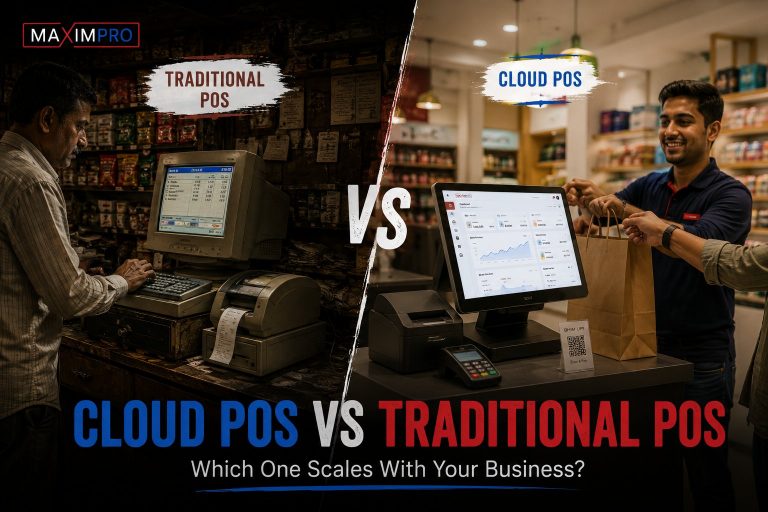
- Fast POS checkout. India’s festival season and month-end rushes create real peak-hour pressure. A billing terminal that lags, freezes, or requires a server room to function is not viable at the shop floor. Cloud-based POS with offline fallback handles this without a dedicated IT team at each outlet.
- GST compliance built in, not bolted on. Auto-calculation by HSN code, correct IGST/CGST/SGST split by transaction type, and audit-ready GSTR-1 and GSTR-3B reports that your CA can actually use. Not a report that needs manual cleaning before it goes to your accountant.
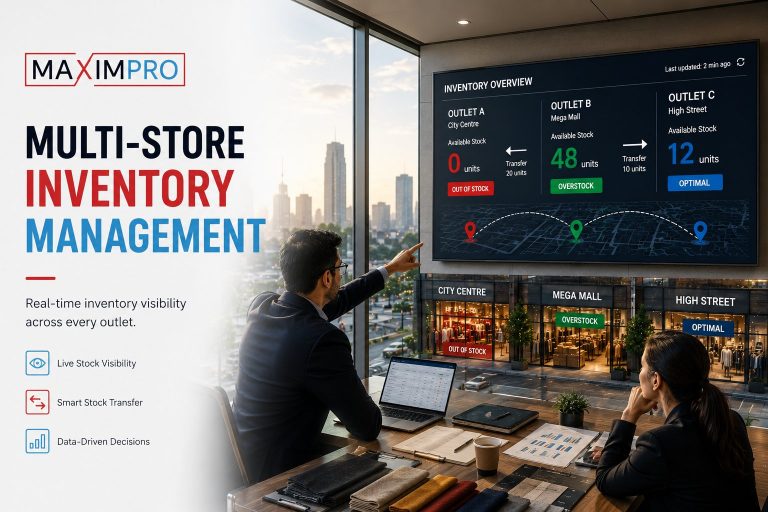
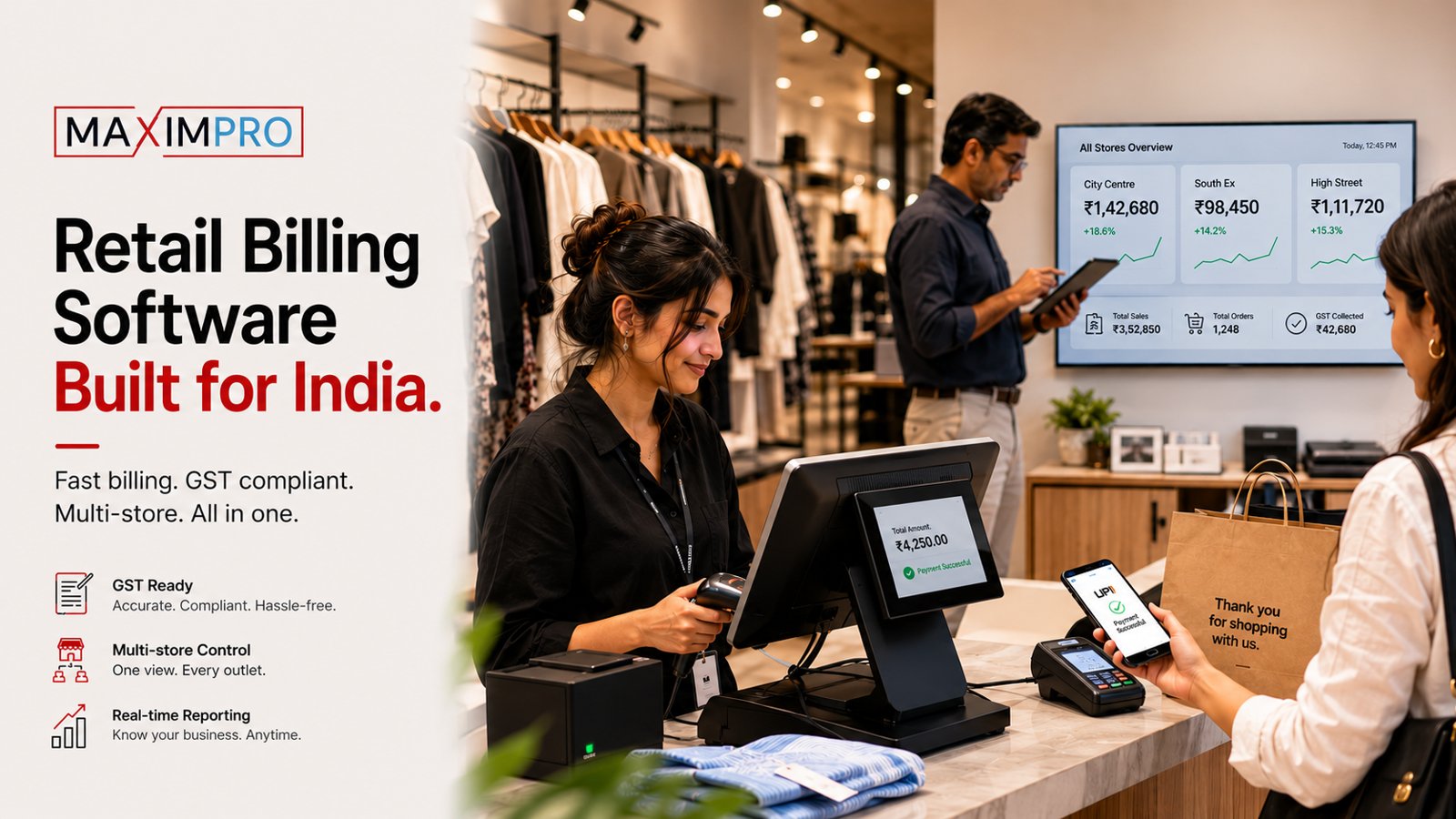
- Multi-outlet operational visibility. One dashboard for stock levels across all branches, inter-store transfer workflow, role-based staff access by outlet, and a mobile report layer the owner can check before the first coffee of the morning — from anywhere.
Digital payment reconciliation also sits in this layer. UPI now handles the majority of retail transactions in India. A billing system that does not reconcile UPI, card, and split-payment transactions against the day’s invoices forces a manual audit every closing shift — and that manual audit is where discrepancies get buried rather than caught. For context on why retail businesses need automated billing software, the general billing overview covers the foundational case.
GST compliance — the non-negotiable for Indian retail
Every billing software vendor in India claims GST compliance. The practical difference between those that deliver it and those that do not becomes clear during a GSTR-1 reconciliation or an e-invoice audit.
Genuine GST compliance in retail billing software means:
- Correct HSN code mapping per product category. GST rates are not flat — food items, electronics, apparel, and FMCG each carry different rates, and some products move between slabs based on price point. The software needs to handle this at the item level, not require the billing operator to remember which tax code applies to which product.
- Accurate IGST/CGST/SGST split. An inter-state sale from a Maharashtra outlet to a customer with a Gujarat GSTIN is taxed differently from an intra-state transaction. The system has to determine the correct split automatically based on the billing address and GSTIN, not rely on the cashier to know the difference.
- GSTR-1 and GSTR-3B export in upload-ready format. Your CA should be able to take the monthly export and file without restructuring the data. If they are spending two hours cleaning your billing report before they can start reconciling, the software is not genuinely compliant — it is just generating invoices that look GST-compliant.
- E-invoice readiness. The e-invoicing mandate under GST currently applies to businesses above ₹5 Cr annual turnover. For retail chains approaching or above this threshold, the billing system must be able to generate an IRP-registered e-invoice and store the IRN against each transaction.
UPI reconciliation is often treated as a payment-gateway problem rather than a billing problem. It is both. A billing system that does not link each UPI transaction to its corresponding invoice leaves a reconciliation gap that accumulates daily and compounds at the quarterly GST filing. MaximPro handles UPI, card, and cash as parallel payment modes against each invoice — so the reconciliation is done at the point of sale, not reconstructed from a payment app export a month later.
What separates multi-store billing software from a single-store POS
A capable single-store POS handles billing, stock, and basic reporting for one location. The architecture that makes it work for one store is the same architecture that makes it break at three stores. The data lives at the outlet level, decisions require someone to call or visit, and consolidation is a manual exercise.
Multi-store billing for Indian retail chains requires capabilities that go beyond a faster or more expensive version of single-store software:
- Regional pricing and GST rate variations. A supermarket chain running outlets in Delhi and Rajasthan may apply different promotional pricing in each market. The billing system needs to support outlet-specific price lists without requiring a separate product catalog for each branch — and the GST calculation at each outlet must still be correct regardless of which price list applies.
- Central promotion management. A Diwali sale that needs to go live across all outlets simultaneously cannot rely on the store manager at each branch to manually update pricing on the morning of the promotion. Central promotion rollout — pushed to all terminals from the HQ dashboard — eliminates the execution lag and the pricing inconsistency between outlets.
- Per-outlet P&L with chain-wide consolidation. The owner needs to see both: which outlet is performing and what the chain totals look like together. These are different views of the same data, and both need to be available on demand, not assembled from individual outlet reports by the accounts team at month-end.
- Role-based access by outlet and by function. A cashier at outlet B should not be able to view or edit outlet A’s transactions. A regional manager should see all outlets in their region but not head-office financial data. A billing system that handles staff access as a flat permission model cannot support this — and for a growing chain, this is not optional.
For a full breakdown of how these capabilities connect, see the overview of retail chain management software for multi-outlet Indian retailers.
MaximPro for Indian retail chains
MaximPro is built specifically for multi-outlet retail — not a general business accounting tool with a billing module added, and not a POS that works for one store and struggles at three. The architecture starts from the assumption that a retail chain is one business running across several locations, and the billing layer should reflect that.
The key capabilities for Indian retail:
- GST-compliant invoicing. HSN code mapping, correct IGST/CGST/SGST calculation, GSTR-1 and GSTR-3B export in upload-ready format. The compliance layer is built into the invoicing workflow, not generated as an afterthought report.
- Turbo POS for peak-hour performance. Designed to handle high-footfall periods — month-end rushes, festival season, weekend volume spikes — without requiring a local server or dedicated IT support at each outlet. Cloud-hosted with offline fallback keeps billing running even during connectivity interruptions.
- Multi-outlet dashboard and mobile reports. The owner sees real-time sales, stock levels, and transaction summaries across all outlets from one dashboard. The mobile report layer means this view is available from a phone at any time — not only when logged into the back-office system. Manage every outlet from your phone with MaximPro covers the mobile reporting module in detail.
- Mobile WebStore integration. Retail chains that want to extend to online sales can do so through MaximPro’s built-in mobile WebStore — without standing up a separate e-commerce platform and managing a separate inventory sync. The same product catalog and stock levels feed both the in-store POS and the online channel.
Pricing runs per outlet: Lite at $80/month, Pro at $100/month, and Enterprise at $130/month. For a 5-outlet chain, the comparison against maintaining separate billing software, a standalone inventory tool, and a manual GST reconciliation process — plus the accountant hours that process consumes — typically makes the consolidated platform the lower-cost option. MaximPro’s full billing and POS features covers the complete module breakdown by tier.
MaximPro vs. alternatives — an honest comparison for Indian retailers
Indian retailers comparing billing software typically evaluate three or four options. Here is what actually differentiates them, without the promotional framing:
Tally: The dominant choice for Indian accounting and GST filing. Strong for bookkeeping, ledger management, and compliance reporting. Not designed as a real-time multi-outlet POS — the checkout experience at the billing terminal is not where Tally was built to compete. Chains that use Tally for accounts and a separate POS for billing end up running two systems with an integration in between, which introduces reconciliation overhead and data lag.
Zoho POS: Cloud-native, GST-aware, and part of a broader Zoho ecosystem that includes CRM and inventory tools. A reasonable option for retailers who are already invested in the Zoho suite. The retail-chain-specific features — inter-store transfers, central promotion rollout, per-outlet P&L — are thinner than in a purpose-built retail chain platform. The ecosystem breadth is also its weight: configuration for a pure-retail use case takes longer because the platform is designed for many business types, not one.
myBillBook and similar SME tools: Appropriate for a single-store or two-store operation where the primary need is GST invoice generation and basic stock tracking. Limited multi-outlet architecture. When the chain grows, the migration cost is paid twice — once to set up the SME tool and again when it is outgrown.
MaximPro’s position: Built specifically for multi-outlet retail, with an India-GST compliance layer and a GCC-VAT compliance layer in the same platform. The combination that no Indian billing tool in this comparison offers is the native integration with AI video analytics for retail theft prevention via VIZO361 — so billing discrepancies and stock shrinkage can be investigated using the same operational layer, not two separate vendor relationships. This matters for chains where cashier-level fraud or back-room stock leakage is a recurring problem.
The India + GCC advantage — one platform for multi-geography retail
A segment of Indian retailers — particularly those running apparel, FMCG, or supermarket chains — operate outlets in both India and the Middle East, especially in Oman and the UAE. This is a real operational pattern in the Indian diaspora business community in the Gulf.
Running two separate billing systems for the two geographies — one for India’s GST framework and one for Oman’s VAT framework — creates the same reconciliation overhead at the chain level that separate outlet-level systems create within India. Consolidated chain-wide reporting becomes impossible when the underlying systems are different.
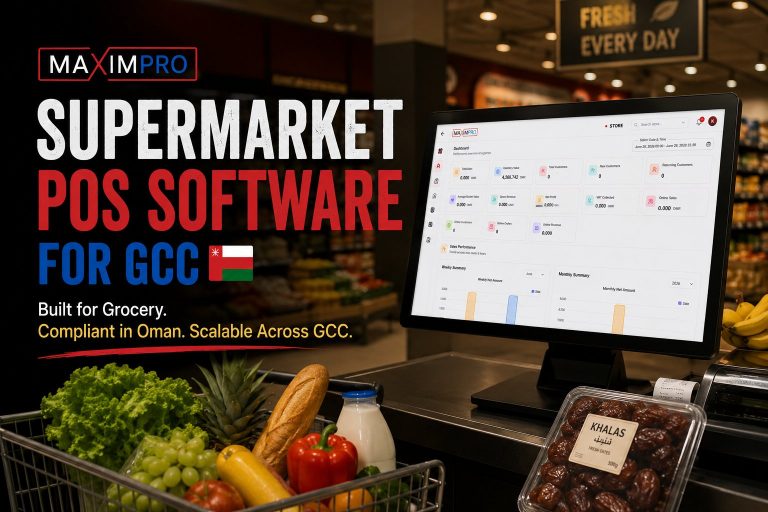
MaximPro handles both compliance frameworks within the same platform architecture. India outlets run on the GST billing configuration; Oman and GCC outlets run on the VAT configuration. The owner’s consolidated dashboard shows all outlets regardless of geography, and the per-outlet compliance reporting is generated correctly for each jurisdiction. For Indian retail operators looking at GCC expansion — or already running outlets in both markets — this removes one of the more painful system-change decisions that growth usually triggers.
MaximPro is a Proeffico product, built on the same engineering foundation that powers VIZO361 AI video analytics and ZIVUX CRM.
Frequently Asked Questions
What is the best billing software for retail shops in India?
The right answer depends on chain size and compliance requirements. For a single-store retailer, lightweight GST billing tools work adequately. For a chain of three or more outlets, the requirement shifts to multi-outlet inventory sync, centralised GST reporting, and a real-time dashboard — which narrows the field significantly to purpose-built retail chain platforms like MaximPro.
Does MaximPro work with GST e-invoicing?
Yes. MaximPro supports GST e-invoice generation with IRN linking for businesses above the applicable turnover threshold. The invoicing workflow handles IRP registration and stores the IRN against each transaction automatically.
How much does retail billing software cost in India?
Entry-level GST billing tools run ₹500–₹2,000 per month for a single store. Multi-outlet platforms priced per outlet — like MaximPro at $80–$130/month per outlet — represent a higher per-store spend, but that cost includes inventory sync, centralised GST reporting, and an integrated accounting layer that would otherwise require a separate tool and additional accountant hours.
Can one billing system manage 10 outlets across India?
A system built with a genuine multi-outlet architecture can. The requirements are: a shared product catalogue that propagates to every outlet, real-time stock sync across locations, and centralised reporting that can aggregate chain-wide or isolate by outlet on demand. The constraint is not technical — it is whether the software was designed for this use case from the ground up, or adapted to it from a single-store base.
Is MaximPro better than Tally for retail chains?
They serve different primary needs. Tally is the stronger accounting and GST-filing tool — it is the established standard for Indian bookkeeping and ledger management. MaximPro is the stronger real-time retail operations platform — POS checkout, multi-outlet inventory visibility, and mobile owner reporting. Chains that need both often run them in parallel; MaximPro’s financial accounting module reduces the need for that by handling the accounting layer within the same system and generating GSTR-ready exports directly.
Retail billing software in India is not a commodity decision. The gap between a tool that generates GST invoices and a platform that manages GST compliance, multi-outlet operations, and real-time owner reporting across a chain is large — and the cost of switching platforms once a chain has scaled makes the initial choice consequential.
MaximPro is built for Indian retail chains that are past the single-store stage and need a billing layer that scales with them — from three outlets to fifteen, from India to the GCC, from the billing terminal to the owner’s phone.
Book a 30-minute MaximPro demo — see how GST compliance, multi-outlet stock, and mobile reports work on your store type and outlet count, with your own billing scenarios rather than a generic walkthrough.
MaximPro is a Proeffico product. For retail chains where billing discrepancies point to stock shrinkage, VIZO361 AI video analytics for retail integrates with MaximPro POS to bring loss prevention and billing reconciliation into one operational picture.